Trivia Night
- 3.5
- Rating
- 1.00M
- Installs
- Free
- Price
 Analysis by App-foxy
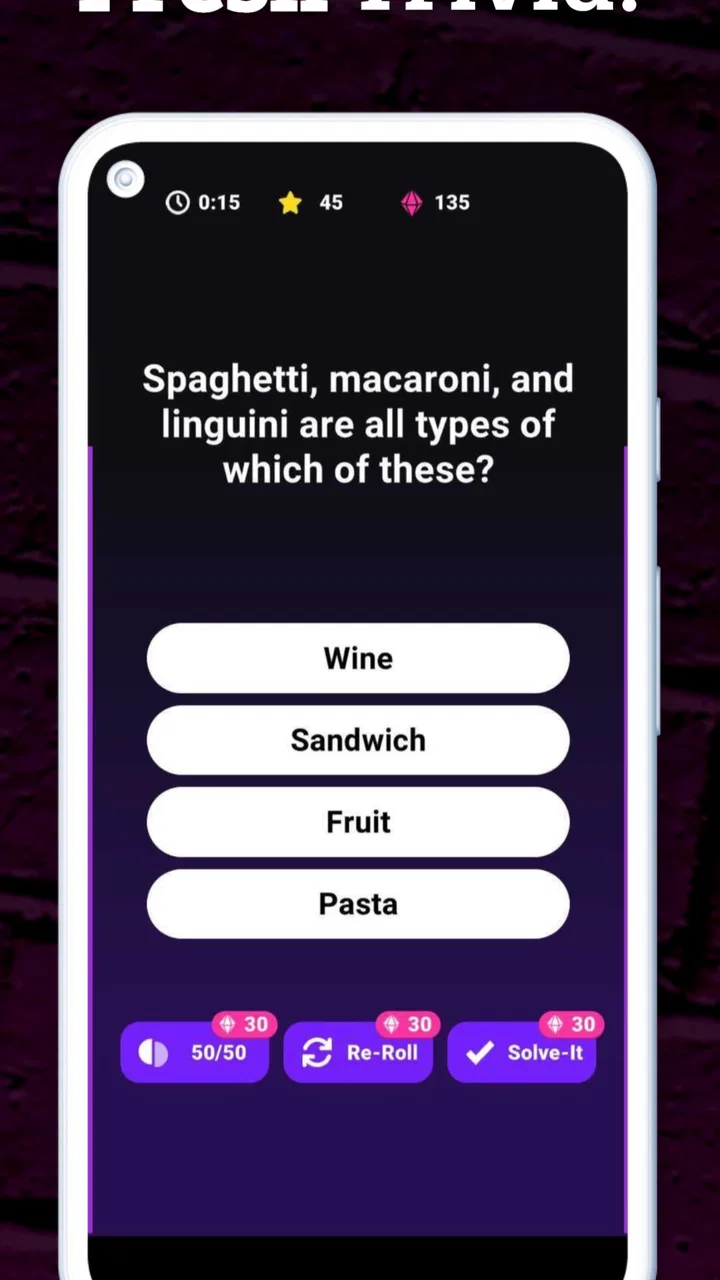
I enjoy trivia games most when they make a group talk, argue, laugh, and occasionally discover that the person who seemed least interested knows an astonishing amount about one very specific subject. Trivia Night, a free trivia game from Random Logic Games, LLC, aims at that casual quiz-night feeling rather than presenting itself as a serious study tool. That distinction matters: I see it as something to open when I want a quick mental break or a light challenge, not as a replacement for a structured learning app.
The game sits in the trivia category and is suitable for Everyone, which makes it easy to consider for mixed-age households. It has passed the million-install mark, so it is not an obscure experiment, although its average rating of 3.4 from roughly two thousand ratings suggests that the experience will not suit every player. My own view is similarly balanced. There is a pleasant, accessible idea here, but the enjoyment depends heavily on whether you like broad quiz questions, tolerate occasional friction, and are comfortable with a free game that includes optional purchases.
How I use Trivia Night for a reliable quiz routine
I make Trivia Night feel more reliable by keeping each session focused: I choose a quiet moment, read carefully, and stop when my attention starts to wander. That routine helps me tell a genuine knowledge gap from a rushed mistake, and it makes the game easier to fit into ordinary downtime. Next, I look at how those habits can work when other people join in.
You May Also Like

 Blood Strike: 2.5 Anniversary
Blood Strike’s Loadouts Turn Every Drop Into a Tactical Gamble
A close look at Blood Strike’s custom loadouts: how fast access to signature weapons reshapes its battle royale rhythm, rewards preparation, and narrows the gap between fights.

 Pandora - Music & Podcasts
Pandora’s Music Is Easy to Start, but Harder to Recover
Pandora’s strength is its low-effort path from a seed to a station. Its weak spot is how much confidence it asks you to place in connection, setup, and quiet recovery.

 8 Ball Pool
 Is Built on Rivalries, Rematches, and Routine
A close look at the rivalries, rematches, shared routines, and unanswered safety questions that turn a quick pool match into a persistent mobile community.

 Samsung Music
’s Quiet Strength Is Playing What You Already Own
Its reach comes less from spectacle than from dependable access to a personal library. That simplicity is both the app’s strongest retention engine and its ceiling.

 AccuWeather: Weather Radar
AccuWeather Review: A Quick, Clear Forecast for Everyday Decisions
For everyday plans, the best forecast is the one you can understand quickly. AccuWeather makes rain timing, radar, and local conditions easy to act on, with a few trade-offs.

 Hill Climb Racing
Why Hill Climb Racing Still Turns Crashes Into One More Run
A tiny car, a bumpy hill and one more upgrade: Hill Climb Racing keeps resurfacing because its simple chaos makes every near-miss feel personal.
More From Our News Desk



A simple starting workflow works best
When I first open a trivia game, I do not try to optimize everything immediately. I play a few rounds in the most straightforward way possible, paying attention to the rhythm between question, answer, feedback, and the next challenge. That basic routine is especially useful here because it tells me quickly whether the game’s pacing matches my mood. If I have only a few spare minutes, I want to know whether I can complete a satisfying session without feeling pulled into a long commitment.
My usual approach is to treat each session as a small block rather than endlessly chasing a perfect result. I answer carefully on the first pass, note the subjects that repeatedly slow me down, and avoid guessing wildly just to keep moving. This turns a casual game into a modest practice loop: answer, notice the mistake, remember the reason, and return later with a clearer head.
That habit is more valuable than it sounds. Trivia questions often reward recognition rather than deep reasoning, so an answer that feels obvious one day can disappear completely the next. I find that returning after a break gives me a better sense of what I actually know. If I play while tired and immediately repeat the same question, I may remember its position or wording instead of learning the underlying fact.
For a relaxed evening with friends, I would use one device as a conversation starter rather than treating the score as the entire point. Read a question aloud, let everyone commit to an answer, and then compare reasoning before revealing the result. This works particularly well when people have different strengths. One person may know history, another entertainment, and someone else may be surprisingly good at science. The game becomes more social when the group discusses why an answer seemed plausible.
Who will get the most from the format
I think Trivia Night is best for players who like general-knowledge quizzes and want low-pressure entertainment. It can fill the gap between a mobile puzzle and a full board-game session. It is also a reasonable choice for someone who wants to test their recall without setting up an account-based study plan or committing to lessons.
Families should find the Everyone rating reassuring, but age suitability does not guarantee that every question will be equally interesting to every person. Younger players may enjoy the challenge while still encountering subjects they have not studied yet. Older players may recognize more references but also find some questions too easy. In a mixed group, I would focus on discussion and variety instead of assuming the score alone measures intelligence.
I would skip it if my main goal were systematic education. A dedicated learning app usually explains concepts, organizes subjects, and tracks progress in a more deliberate way. Trivia Night is better at prompting recall than teaching from the ground up. Likewise, players who need a highly competitive multiplayer structure, detailed rankings, or a carefully controlled question difficulty may prefer a more specialized alternative.
What the free model means in practice
The game is free to install, which makes trying it low risk. Optional in-app purchases range from under a dollar to several dollars per item. I would decide early whether I am happy to stay within the free experience or whether I am likely to spend money to reduce interruptions or unlock conveniences. That small decision prevents a casual session from becoming an unplanned purchase cycle.
My practical advice is to play naturally before buying anything. A purchase cannot fix a mismatch between the game’s question style and your interests. If the core quiz loop already feels enjoyable, an optional item may make sense for your personal routine. If the questions feel repetitive or the pacing bothers you, spending more will not change the fundamental character of the game.
Settings I would check before settling in
I always inspect the available settings before judging a mobile game. In Trivia Night, the useful questions are not only about appearance. I want to know whether sound can be adjusted, whether notifications can be controlled, and whether any display or interaction options make repeated sessions more comfortable. I would also check the device’s own notification controls if I prefer the game to remain completely quiet outside active play.
This is a small but important workflow improvement. A trivia game is often used in places where sound is inconvenient: a waiting room, a shared bedroom, public transport, or a short break at work. Muting the phone before starting is a sensible habit, but checking the game’s own controls is better than relying on memory every time. If audio feedback is part of the enjoyment for you, use it at home and keep a silent routine for public spaces.
I also recommend checking the game after an update rather than assuming every preference remains exactly as before. The current version is 1.1.7, and version changes can sometimes alter the feel of menus or the way a setting is presented. I would not treat an update number as a reason to install blindly, but keeping the app current is a practical way to avoid judging an older build.
Small habits that make sessions smoother
One of my favorite habits is to separate “I knew that” from “I guessed correctly.” Those are not the same result. When I answer by instinct, I mentally mark the question as uncertain even if the result is right. Later, if a similar subject appears, I can tell whether I have improved or simply benefited from a lucky choice.
I also avoid playing while doing something that requires concentration. Trivia looks simple, but divided attention creates misleading results. A missed answer may reflect a distracted moment rather than a knowledge gap. If I want an honest personal benchmark, I play with the phone in hand, read the full question, and decide before looking away.
For household use, I would create a rotating host habit. One person reads the question, everyone answers at the same time, and the reader changes each turn. This avoids giving the fastest tapper an unfair advantage and makes the game work even when the group is more interested in conversation than individual performance. It is a better use of the app than silently passing the phone around while everyone waits.
Faster patterns for experienced players
Speed can be useful, but I do not recommend rushing every question. A better pattern is to scan the question once for its subject, once for the exact wording, and then compare the answer choices. This helps with questions where one word changes the meaning. Trivia games often reward careful reading because a familiar topic can tempt you into selecting the first answer that sounds right.
I find it helpful to classify uncertainty into three types: I know the answer, I can eliminate options, or I am making a blind guess. The second category is where many players can improve fastest. Instead of searching memory for a perfect fact, remove answers that conflict with the time period, location, definition, or scale implied by the question. Even without knowing everything, disciplined elimination produces more reliable decisions.
Another useful pattern is to pause after a wrong answer instead of immediately tapping through. I ask myself whether I misunderstood the wording, confused two similar facts, or simply lacked the information. Each cause needs a different response. Misreading calls for slower scanning. Confusion calls for a comparison between the two facts. A knowledge gap may require accepting the miss and remembering the correct answer for next time.
I would not use external searching during a normal session if the goal is an honest score. Looking up every uncertain answer turns the game into a reference exercise and makes the result meaningless. If learning is the priority, I might look up an unfamiliar fact after finishing a round, not before answering. That preserves the challenge while giving the question a chance to lead me toward something new.
Using the game as a repeatable social activity
Trivia Night is more enjoyable when the group agrees on the rules before beginning. Decide whether everyone answers independently, whether discussion is allowed, and whether the purpose is winning or simply finding the funniest wrong explanation. Without that agreement, a knowledgeable player can dominate and quieter participants may stop contributing.
For a family evening, I would let each person choose one topic they feel confident about and one topic they find difficult. The confident subject gives everyone a chance to participate, while the difficult one keeps the session from becoming predictable. This also reveals an important trade-off: a broad quiz can be more inclusive than a specialist quiz, but it may still produce uneven difficulty from one person to another.
For a short break, I use a stopping rule. I might play until I finish a natural set of questions or until I miss several because my attention has drifted. The point is not to squeeze every possible round from the app. Stopping while the session still feels enjoyable makes it easier to return later instead of associating the game with fatigue.
Where the limits become noticeable
The average rating of 3.4 is a useful warning that broad appeal should not be confused with universal satisfaction. A game can attract many installs and still divide players over pacing, question selection, monetization, or repetition. I would approach this title with realistic expectations rather than assuming its popularity guarantees a perfect fit.
The largest limitation for me is that a trivia format naturally depends on question quality. If a question feels too easy, too obscure, or poorly matched to the player’s interests, the entire round can lose energy. No setting can completely solve that. Players who want carefully graduated difficulty and extensive explanations may find a dedicated quiz platform more rewarding.
There is also a difference between replayability and repetition. Returning to a familiar question can strengthen memory, but seeing too much of the same material can make success feel less meaningful. I judge the game by whether I am enjoying the act of recalling information, not only by whether every session feels completely new. If novelty is your top priority, you may prefer an app built around constantly changing live content.
The free-to-play structure deserves the same honesty. Optional purchases can be convenient, but they introduce a decision that would not exist in a completely paid game. Some players prefer paying once and removing that uncertainty; others would rather try a free title and spend nothing. Trivia Night is more suitable for the second group, provided they are comfortable treating purchases as optional rather than necessary.
Device and age considerations
The game supports devices running Android 7.0 or later, so compatibility is fairly broad for Android users with older hardware. I would still check available storage, battery condition, and notification behavior on the particular phone being used, especially if the device is shared with a child or used for work. Compatibility gets the app installed, but comfort depends on the whole device setup.
The Everyone rating makes it easier to recommend in a family setting, yet I would still play a few rounds with younger users before assuming the content matches their interests or reading level. A general trivia game can be family-friendly while containing questions that are simply beyond a child’s current knowledge. That is not a problem if adults treat mistakes as conversation opportunities rather than criticism.
How it compares with familiar alternatives
Compared with a traditional quiz board game, Trivia Night is quicker to start and requires no physical pieces, score sheet, or dedicated table. The trade-off is that a board game often creates richer negotiation, team strategy, and face-to-face interaction. I would choose the app for spontaneous moments and the board game for a planned social evening.
Compared with educational quiz apps, this title feels more like entertainment than a curriculum. A learning-focused alternative is the better choice when I want explanations, subject progression, or measurable study goals. Trivia Night wins when I want the question itself to be the event and do not need a lesson after every answer.
Compared with live multiplayer trivia services, it is likely to appeal more to someone who wants a flexible personal session rather than a scheduled contest. Live formats bring urgency and community, but they can also require being available at a particular time. I prefer this game when I want to play at my own pace, while I would choose a live service for the excitement of competing with a larger group.
My verdict after building a routine around it
Trivia Night is most convincing as a casual, repeatable quiz companion rather than a complete trivia ecosystem. I like that it can fit into a short break, a family conversation, or an informal gathering without needing much preparation. The broad age rating and free entry make it approachable, and Random Logic Games, LLC has chosen a format that is easy to understand from the first session.
At the same time, I would not recommend it automatically to serious quiz competitors, students seeking structured instruction, or players who dislike optional purchases in free games. Those users may be happier with a specialized learning app, a paid one-time quiz game, or a live multiplayer alternative. The right choice depends less on the number of questions than on the kind of experience you want around them.
My best advice is to establish a simple routine: check the sound and notification controls, play without outside help, separate knowledge from luck, and review mistakes after the round instead of rushing onward. For group play, agree on rules and let discussion matter as much as scoring. With those habits, the game becomes more than a stream of taps; it becomes a compact way to test memory and start conversations.
Released on September 19, 2022, and still available as a free game in its current version, it is easy to try without making a major commitment. I would give it a chance if I wanted accessible general trivia and a relaxed pace. I would move on if the question mix, repetition, or purchase structure began to outweigh the fun. That is ultimately where I land: a worthwhile option for casual quiz fans, provided they approach it as light entertainment and use its limits to choose the right setting for each session.
FAQs for Trivia Night
01What is Trivia Night and how does it work?
Trivia Night is an engaging quiz app that tests your knowledge across various topics, including history, science, entertainment, and more. Players can join solo or compete with friends in real-time. The app offers multiple choice questions, and players earn points for each correct answer. It’s perfect for those who love a challenge and enjoy learning new things.
02Is Trivia Night free to download and play?
Yes, Trivia Night is free to download and play on both Android and iOS devices. While the core features are available for free, the app may offer in-app purchases for additional features such as hints, extra lives, or ad-free experiences. Always check the app store for the latest pricing details before downloading.
03Can I play Trivia Night without an internet connection?
Trivia Night requires an internet connection for accessing real-time multiplayer features and updated question databases. However, there may be modes or features available for offline play, allowing you to enjoy trivia challenges even without connectivity. Check the app’s description or settings for more information on offline capabilities.
04Does Trivia Night offer multiplayer modes?
Yes, Trivia Night includes multiplayer modes where you can compete against friends or other players worldwide. You can join public games or create private rooms to challenge your friends. The multiplayer feature adds a competitive edge, enhancing the fun and engagement as you test your knowledge against others.
05Are there any age restrictions for Trivia Night?
Trivia Night is designed for a broad audience, making it suitable for players of various ages. However, it’s recommended for ages 12 and up due to the complexity of some questions and the competitive nature of the game. Parents can review the app in the store to ensure it meets their family’s content preferences.
Pros
- Engaging questions keep users entertained.
- Multiple categories for diverse interests.
- User-friendly interface with smooth navigation.
- Regular updates with new content and features.
- Supports multiplayer for social interaction.
Cons
- Requires internet connection to play.
- Limited free content; in-app purchases needed.
- Ads can be intrusive during gameplay.
- Occasional bugs may disrupt experience.
- No offline mode for solo play.

Trivia Night
Gallery